Patient Education in Healthcare: How To Build Trust & Empower Patients
Patient education is when a healthcare professional equips their patient with the knowledge they need to understand and manage their health condition. It builds trust between the patient and the doctor, and it empowers the patient to participate in their own healthcare journey.
Patient education is traditionally part of the in-office experience. After doing an examination and running some tests, the physician makes a diagnosis. They then explain this diagnosis to the patient and go over the treatment options. However, patient education can extend beyond appointments to include blog posts on the practice’s website, physical brochures in the waiting room, and any other information given to patients.
Keep reading to learn more about patient education in healthcare. We explore the benefits of patient education and provide some potential ways to incorporate it into running your medical practice beyond appointments.
Benefits of Patient Education
Patient education is beneficial for both patients and doctors. Clear, accessible health information boosts patient engagement, satisfaction, and retention. For healthcare providers, it increases how efficiently their practice runs, allowing them to help more patients.
Increased Treatment Compliance
Health literacy is the degree to which a patient has the ability to obtain, understand, and use health information to make informed decisions about their well-being. It is your job as a physician to ensure your patients have strong health literacy by educating them on their medical conditions and treatment options. When a patient is well-informed, they understand the severity of their condition and the importance of treating it, so they’re more likely to stick to the treatment plan you propose for them.
Better Health Outcomes
When a patient follows their treatment plan, they are more likely to see a desirable health outcome. They can avoid medical complications that arise from leaving their condition untreated. They may also be able to prevent their condition from getting so serious that they have to go to the hospital or return to your office for additional appointments.
Higher Patient Satisfaction
A patient who feels like they received effective treatment is more likely to return to you for future medical concerns. They are also more likely to recommend your practice to others—either by talking to their family and friends or by leaving you online reviews.
Improved Alignment With Value-Based Reimbursement
Reimbursement is how your practice collects payment from Medicare, Medicaid, and private insurers for the treatment you provide to your patients. Traditionally, the healthcare industry has used fee-for-service reimbursement, which means you receive payment for every appointment, treatment, procedure, and test.
However, the industry has recently started adopting value-based reimbursement. This type of reimbursement focuses on the quality of the medical care you provide as opposed to the quantity of services, so your reimbursement rate is higher if your patients report positive health outcomes. Since patient education leads to better outcomes, you’re incentivized to incorporate it into how you treat your patients’ health conditions.
Optimized Resource Allocation
A patient who understands their treatment plan and follows it usually requires less from you in the long run. They don’t need as many follow-up appointments, and they likely won’t call your office or message you through the patient portal to ask clarifying questions. This allows you to optimize your time, staff, exam rooms, and other practice resources to treat more patients.
Limitations of Patient Education
Patient education is not a replacement for treatment. Just because a patient understands the basics of their medical condition doesn’t mean they should try to treat it on their own. It’s still important for them to schedule an appointment with a physician who has proper medical training. Below are some additional limitations of patient education.
Limited Appointment Time
If you have back-to-back appointments or are already behind schedule, you may not have the time to dedicate to educating a patient on their medical condition. This is a potential use case for building out a patient education library on your website with informational content related to your area of practice so that you have something to direct them to. More on digital resources in a later section.
Communication Barriers
A patient’s culture, beliefs, education, native language, and other characteristics can affect how they receive and interpret information. Therefore, how you communicate their medical condition and treatment plan with them may be different from how you would talk to another patient. Generally speaking, though, you want to avoid medical jargon and speak in plain language.
Types of Patient Health Education Content
Aside from appointments, there are a few other times you can incorporate education into your patient experience. Many of these touchpoints happen digitally, such as through website pages or social media posts, but you can also create printed materials to distribute.
Printed Materials
Have brochures printed for your reception area and exam rooms. Use these pamphlets to explain common health conditions in your area of practice. Patients can take these brochures if they’re interested, or you can hand them one on their way out to give them more information about the condition you’re treating.
Website Resources
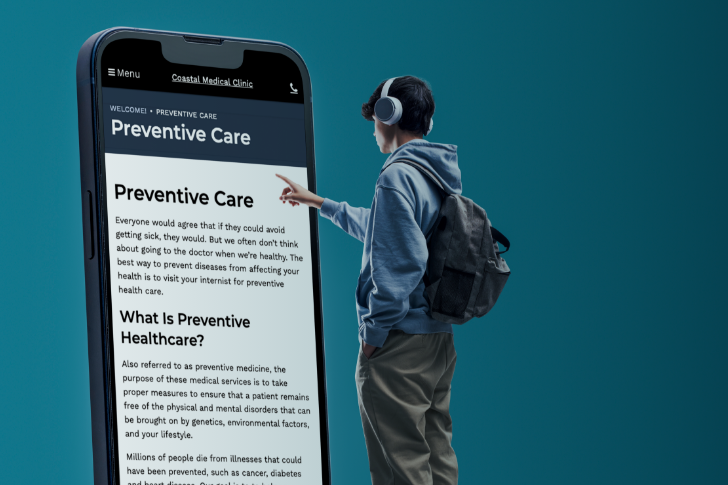
You can add a resource section on your practice’s website to create content related to your area of practice. Maybe this section has blog posts, ebooks, or even videos to educate website visitors on common medical conditions you see with your patients. This is not only useful for your patients, but it also establishes you as a credible, trustworthy healthcare professional, which is an important metric for getting your website to rank on Google search results.
Social Media Posts
Social media is another place to publish any educational videos you may have. You can also use these platforms to post tips on self-care or preventative care—maybe tied to the time of year to stay relevant. For example, a primary care physician might create a post about washing your hands and other ways to prevent getting sick during flu season. These posts should be short to make sure you don’t lose your followers’ attention. Any long-form content can go on your blog.
Email/Text/Portal Messages
Emails and texts are common for reminders about upcoming appointments and medication refills, but you can also use them after appointments to summarize the visit and the treatment plan you discussed with them. If a patient has any follow-up questions, they can send you a message through your patient portal.
Patient Centered Medical Websites & Marketing Solutions
Tips for Effective Patient Education
To ensure your patient education efforts are as effective as possible, we have compiled some best practices to help you implement it at various touchpoints with your patients.
Use the Teach-Back Method
The teach-back method is a tool you can use at the end of an appointment to ensure your patient understands the information you have given them. After explaining the diagnosis and treatment plan, ask the patient to repeat back what you said in their own words. This allows you to clarify any misconceptions immediately.
Encourage Questions
Another way to ensure that your patient leaves the appointment understanding their treatment plan is to encourage questions. Make sure your patients know it’s a two-way conversation so that they feel comfortable asking you clarifying questions. After you finish explaining the treatment, ask “What questions do you have?”. Framing it this way instead of “Do you have any questions?” implies that having questions is normal and welcomed.
Customize Educational Materials
Conduct research into the demographics of your patient population, and tailor your educational materials to meet their needs and preferences. For example, if your office is near a college campus, your patients are probably younger. Since they grew up with technology, they might be more comfortable with digital patient education resources, so you can invest less in print assets.
Use Visual Aids
Patients may get overwhelmed if a lot of information is thrown at them at once. Add visual aids, such as infographics, to your blog posts, social posts, pamphlets, and other patient education materials to break up the text and get your point across.
Incorporate Patient Feedback
You can add a form to your emails, texts, and website to request feedback from your patients. The feedback you receive will likely be related to every aspect of your patient experience, but you can extract any insights you get about education specifically and act on them. For example, maybe several patients mentioned their appointments feeling rushed. In which case, you can implement a new policy to extend appointment time slots by five or 10 minutes to ensure you can answer all patient questions.
Update Assets Regularly
Best practices in the medical care industry are constantly evolving, and you want to make sure your patient education efforts are taking this into account. It’s an easy fix to change the language you’re using during in-person interactions, but you also want to update digital and print resources.
Implement Digital Tools
If you plan to create patient education content that lives online, you’re going to need some digital tools to manage it. For instance, you might need a website builder and host for blog content, accounts for social media platforms, and electronic health records (EHR) or electronic medical records (EMR) software for texts, emails, and portal messages.
Train Staff
Patient education is a big undertaking to do on your own. That’s why we recommend training your staff to help you with it. You can handle patient education during appointments and teach your staff members how to create website and social media content. Or, maybe you feel more comfortable writing the content yourself to ensure that it’s accurate. You can still have your staff manage your digital tools to get that content published.
Final Thoughts
Patient education helps patients feel supported, informed, and empowered. It also improves patient outcomes and optimizes practice operations. Officite is available if you are interested in implementing patient education but need help getting started. We have a patient education service to help you create website content and other digital resources.

Katie McNichols is an experienced writer and editor, specializing in digital content. The aim of her blog posts is to demystify digital marketing for healthcare professionals. She hopes to equip them with the tools they need to build an online presence that promotes their services and grows their practice.