


SEO
Appear higher in Google and get found by prospective patients. Our local SEO experts help your practice stand out online.
Read More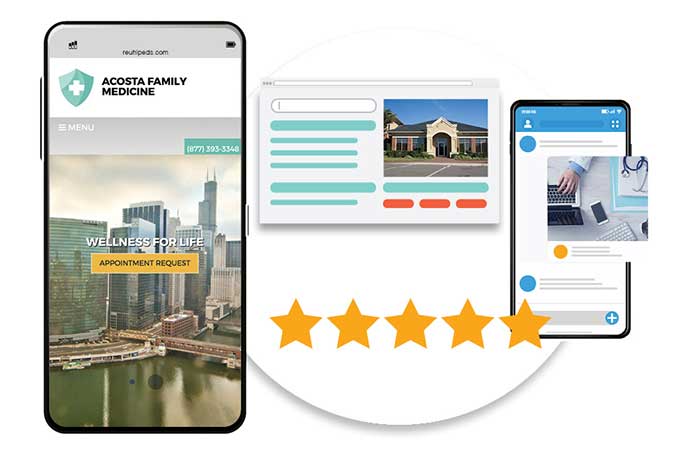


Take charge of how you show up online. Get more 5-star patient reviews and eliminate fraudulent ones.
Read More

Connect with current patients on social media and get found by new ones.
Read More

Monitor and know the sources of inbound calls to improve the patient experience & staff performance.
Read More

See patients from almost anywhere. Modernize your healthcare practice & generate more revenue.
Read More

Medical marketing is central to your effort to expand your reach online. Medical marketing facilitates the connection between:
• Pharmaceutical companies
• Medical professionals
• Medical Clinics
• Hospitals
Fully understanding your intended demographic is the bedrock of your digital marketing strategy. You must know not just the demographics but also the inclinations of patients and consumers of healthcare. Equipped with this understanding, healthcare marketers can customize their marketing strategy and communication channels to guarantee accurate dissemination of information to the intended recipients.
Credibility and trustworthiness are also of utmost importance in medical marketing for doctors. Educate patients by sharing medical marketing insights that address real needs. Patients and consumers desire assurance in the products and services provided by the healthcare industry.
Medical practitioners must emphasize the credentials, experience, and proficiency of healthcare professionals and the effectiveness and safety of medical products. One can cultivate trust and instill confidence in prospective clients by providing testimonials, case studies, and positive patient outcomes from your medical marketing campaign.
Effective medical marketing at Officite also follows ethical principles to preserve the profession's standing. Adherence to regulatory standards and healthcare marketing guidelines established by pertinent governing bodies, including medical boards, professional associations, and government agencies, is paramount. To prevent potentially deceiving patients or making erroneous claims, it is vital to ensure that marketing communications are truthful, transparent, and accurate.
Providing educational and informative content is also crucial for medical marketing initiatives. Initial forays into the medical marketing field should concentrate on developing educational content marketing that imparts knowledge to patients and consumers regarding various health conditions, available treatments, preventative measures, and holistic well-being among other medical services. Blog posts, social media, videos, podcasts, and newsletters can all serve as reliable sources of information that can be given to your patients and their families.
Medical practices can also quickly establish their expertise and credibility as authoritative figures in their specific domains by providing valuable information through content marketing and video marketing.
Data analysis is an integral component of online marketing. Conducting assessments of the efficacy of digital marketing campaigns, monitoring social media metrics, and tracking website analytics yield significant insights into the behavior and preferences of target audiences. The information provided can assist medical practitioners in making well-informed choices regarding content development, marketing strategy, and resource distribution, thereby maximizing the effectiveness of their digital marketing endeavors.
Developing a consistent and genuine brand identity is the initial phase of any medical marketing endeavor. An audience perceives a brand as an identity or how a business operates; it is implemented in all marketing initiatives.
Most patients are presented with various healthcare options, many of which resemble one another in appearance:
• White robes
• Smiling physicians
• Gleaming structures
A brand can be established by identifying the target audience and their requirements. This will form an integral component of the external brand's framework. Additionally, it will contribute to the organization's unique personality and support your digital marketing strategy.
Additionally, branding can occur beyond private practices. Branding is essential for hospitals and can aid in acquiring more patients and retaining existing ones.
Effective branding for medical practices ought to emphasize the identity of the practice, its distinctive qualities, and its approach to patient care. Brand identity elements encompass various elements such as personnel attributes, the ambiance of the workplace, and the encounters with patients. This information can generate brand mantras and slogans that ensure message consistency across all marketing endeavors.
After developing a good brand, the next step is to bring the branding to life online with a responsive website. You can begin the effort by redesigning your healthcare website, a critical initial phase in medical marketing efforts and part of any effective digital marketing plan.
Officite’s websites are responsive and are also HIPAA-compliant, making them perfect for your healthcare practice.
Patients locate their medical clinics or healthcare provider via the Internet. This stresses the importance of having an accessible and responsive website even further. A responsive website has undergone optimization to accommodate mobile users by adjusting the dimensions and structure of the page to suit the screen of a smartphone. As a result, the user experience is altered.
The user experience relies heavily on the interactions with and response to navigating a website. It encompasses various elements, including loading speed, writing and design style, functionality, and the user's capacity to achieve their intended objective (e.g., scheduling an appointment). Maintaining a responsive and user-friendly website is crucial for retaining potential patients and increases the likelihood that a medical practice will successfully convert them into paying members.
Most individuals leverage search engines such as Google to seek healthcare information. Employing paid search advertisements is an effective digital marketing strategy to connect with a broad spectrum of potential patients. Pay-per-click ads offer the flexibility to tailor outreach to a specific audience, allowing for precise targeting based on location and keywords. This focused approach ensures that only local users are reached, enhancing the organization's visibility at the forefront of search results.
This targeted advertising increases the likelihood of reaching individuals seeking healthcare services and optimizes the organization's prominence in search engine results. By strategically filtering ads based on location and relevant keywords, the outreach becomes more personalized and resonates with the specific needs of the local community.
The PPC model also ensures that the medical practice only incurs costs when users actively engage with the advertisements. This cost-effective healthcare marketing approach maximizes the return on investment by directing resources toward individuals more likely to convert into patients.
Additionally, the ability to track and analyze the performance of these advertisements provides valuable insights. Practices can fine-tune their online marketing strategies based on data-driven metrics, refine their targeting parameters, and optimize content marketing to align with the preferences of their audience.
Leveraging paid search ads broadens the reach of healthcare information and allows organizations to position themselves strategically within the local healthcare landscape. This dynamic and targeted digital marketing approach enhances visibility, engages potential patients, and ultimately contributes to your medical practice's overall success and growth.
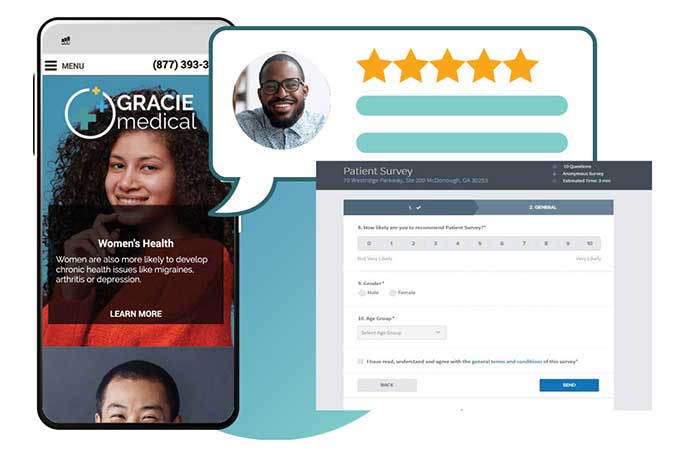
An integral facet of brand development and a pivotal medical marketing strategy involves actively seeking and cultivating reviews. When individuals seek medical practices, they often rely on review sites and ratings and online reviews from previous patients to gauge the quality of the provider. Positive reviews significantly enhance the likelihood of a healthcare provider attracting more patients, establishing a reputation that resonates positively.
Encouraging patients to share their experiences through reviews contributes to building your credibility. These reviews should be easily accessible on the organization's healthcare website and require vigilant monitoring.
In the event of a negative review, best practices dictate a prompt and empathetic response, urging the patient to initiate direct contact with the practice to address concerns privately. This approach demonstrates the medical practice's commitment to its patients' experiences and underscores its ongoing dedication to improvement. This proactive engagement serves to uphold a positive online brand perception.
It ensures that the medical practice remains attuned to patient feedback, actively addressing concerns and fostering an environment where patient experiences contribute positively to the overall reputation of the healthcare provider.
Online reputation management for medical practices is not a one-time effort; it's an ongoing process. Regularly encouraging patients to share their feedback helps accumulate diverse experiences, reflecting the medical practice's commitment to transparency and openness. By featuring these reviews prominently on the website, a medical practice showcases its dedication to patient satisfaction and provides valuable insights to potential patients. The authenticity of patient testimonials serves as a powerful endorsement, influencing the decision-making process of those seeking healthcare services.
The synergy between social media and medical marketing for doctors is undeniable. With the prevalence of smartphones among patients, who use them not only for accessing social platforms but also for discovering new healthcare providers, about two-thirds engage with social media daily. Social media serves as a dynamic channel for medical clinics to establish a personal connection with patients, always mindful of adhering to privacy regulations like HIPAA, thereby enabling them to tap into a fresh and youthful audience.
The successful integration of social media into medical marketing strategies is evident, with numerous providers effectively building a loyal following over the years.
A prime example is Dr. Sandra Lee, widely recognized as Doctor Pimple Popper, who has harnessed platforms such as YouTube, Instagram, and, more recently, TikTok to amplify her dermatology practice. In doing so, she attracts new patients and entertainingly disseminates valuable healthcare information, showcasing the multifaceted potential of social media in the healthcare domain.
This dynamic utilization of social media fosters patient engagement and is a powerful tool for healthcare education and outreach. Medical practices can leverage these platforms to disseminate timely and relevant information, educate patients, debunk myths, and promote health awareness campaigns. By doing so, they connect with the existing patient base and contribute to the broader public health discourse.
The interactive nature of social media allows for real-time communication and feedback, enabling healthcare providers to address inquiries, share updates, and humanize their practices. Through strategic content marketing, providers can showcase their expertise, highlight patient success stories, and create a positive online presence.

