
Understanding the Impact of HIPAA Email on Digital Marketing in Healthcare
With the rise of digital marketing, healthcare organizations must comply with the Health Insurance Portability and Accountability Act (HIPAA). Healthcare entities are permitted to share information with individuals about their participating providers and the services included in a health plan network and health care provider network without requiring individual authorization, as these actions are considered non-marketing communications in the context of providing necessary health-related services.
Violating HIPAA regulations when handling Protected Health Information (PHI) via email can lead to a HIPAA violation, resulting in serious consequences. This federal law establishes standards for protecting sensitive patient information, making HIPAA compliance crucial for digital marketing efforts, particularly through HIPAA-compliant emails and forms on practice websites.
Introduction to HIPAA Email
HIPAA sets strict standards for handling PHI in healthcare. A covered entity must use HIPAA-compliant email services to safeguard sensitive patient data. A compliant email service must implement robust security measures, including securing the email server, access controls, audit controls, integrity controls, and encryption to protect PHI. Adhering to HIPAA regulations helps healthcare providers secure their email communications and avoid potential fines. Additionally, for marketing communications involving protected health information, covered entities must obtain an individual’s authorization to ensure compliance and protect patient privacy.
The Importance of HIPAA Compliance in Digital Marketing

As healthcare providers adopt digital marketing strategies, HIPAA compliance becomes vital. Non-compliance can result in severe penalties, including fines and reputational damage. Key reasons for HIPAA compliance in medical digital marketing include:
- Protecting Patient Privacy: HIPAA aims to safeguard patient privacy, ensuring that communications do not compromise personal health information.
- Building Trust: Patients are more likely to engage with providers who prioritize privacy, fostering long-term relationships.
- Avoiding Legal Consequences: Violating HIPAA can lead to fines ranging from $100 to $50,000 per violation. Obtaining an individual’s authorization is crucial for using or disclosing protected health information (PHI) for marketing purposes, and must be in the form of the individual’s written authorization, especially when financial remuneration is involved.
- Enhancing Marketing Effectiveness: HIPAA compliance can improve marketing effectiveness by ensuring secure communications, leading to higher engagement rates.
HIPAA-Compliant Emails: A Necessity for Healthcare Marketing
Email is a common marketing communication tool, but standard email services do not protect sensitive PHI and other sensitive data. Therefore, healthcare providers must use HIPAA-compliant email solutions.
What is HIPAA-Compliant Email?
HIPAA-compliant email services meet the security and privacy requirements outlined in HIPAA. Features include:
- Encryption: Emails must be encrypted both in transit and at rest to protect sensitive information. It is crucial to encrypt emails to ensure HIPAA compliance, especially when handling sensitive health information.
- Access Controls: Strict access controls ensure only authorized personnel can access PHI.
- Audit Trails: HIPAA email services should provide audit trails to track access to PHI.
Benefits of Using HIPAA-Compliant Emails
- Security: Enhanced security protects patient information from breaches and phishing attacks.
- Patient Engagement: Patients are more likely to engage with providers who prioritize their privacy.
- Streamlined Communication: HIPAA-compliant email solutions improve communication efficiency.
- Compliance Assurance: Using compliant email services helps ensure adherence to HIPAA regulations. Additionally, HIPAA marketing authorization is not required for communications involving a promotional gift of nominal value.
Security Rule Safeguards
The HIPAA Security Rule mandates comprehensive safeguards to protect electronic PHI (ePHI). This includes regular risk assessments and training workforce members on HIPAA email policies. Covered entities must ensure that business associates, including email service providers, comply with HIPAA through business associate agreements.
Administrative, Physical, and Technical Safeguards
- Administrative Safeguards: Protect ePHI from unauthorized access through risk assessments, policies, and employee training.
- Physical Safeguards: Secure email servers and equipment to prevent unauthorized access and ensure the email server is compliant with HIPAA standards.
- Technical Safeguards: Use technology, such as encryption and access controls, to protect ePHI.
Administrative Safeguards
Administrative safeguards are a crucial aspect of HIPAA compliance, particularly in the context of email communications. These safeguards are designed to protect electronic protected health information (ePHI) from unauthorized access, use, or disclosure. Covered entities and business associates must implement administrative safeguards to ensure the confidentiality, integrity, and availability of ePHI. This includes conducting regular risk assessments, implementing policies and procedures for HIPAA compliance, and providing training to workforce members on HIPAA policies and procedures. Additionally, administrative safeguards require covered entities and business associates to have a business associate agreement in place with any third-party vendors that handle ePHI, such as email service providers. By implementing administrative safeguards, healthcare organizations can ensure that they are protecting sensitive patient data and maintaining HIPAA compliance.
Email Encryption Requirements for Protected Health Information
HIPAA requires covered entities to implement encryption standards for emails containing PHI. These standards help reduce the risk of data breaches and unauthorized access.
Breach Notifications
In the event of a breach, covered entities must notify affected individuals and the Department of Health and Human Services (HHS). Notifications must include details about the breach and steps taken to mitigate it. A HIPAA-compliant email service provider should have a breach notification policy and provide training on breach response.
Marketing Restrictions
HIPAA defines marketing as communications encouraging the purchase or use of products or services. Generally, covered entities cannot use PHI for marketing without written individual authorization, except in limited circumstances. Certain communications related to healthcare operations do not require individual authorization, especially those related to the individual’s treatment. Compliance with the Privacy Rule is essential for marketing communications.
Business Associate Requirements
Business associates, including email service providers, must comply with HIPAA standards and enter into business associate agreements with covered entities. These agreements outline the handling of ePHI and require appropriate safeguards.
Breach Notifications
Breach notifications are a critical component of HIPAA compliance, particularly when it comes to protected health information (PHI) being sent via email. In the event of a breach, healthcare organizations must notify affected individuals and the covered entity’s responsibilities include notifying the Department of Health and Human Services (HHS) within a specified timeframe. The breach notification rules require that notifications be provided in writing and include specific information, such as a description of the breach, the types of PHI involved, and steps the individual can take to protect themselves. Additionally, communications about government-sponsored programs like Medicare and Medicaid are not considered marketing under HIPAA, allowing entities to share information about eligibility and benefits related to these programs without needing individual authorization.
HIPAA-compliant email services can help healthcare organizations prevent data breaches by implementing robust security measures, including access controls, audit controls, and end-to-end encryption. These measures ensure that sensitive patient data is protected from unauthorized access and potential breaches. By using a HIPAA-compliant email service, healthcare organizations can ensure that they are in compliance with breach notification rules and can respond promptly and effectively in the event of a breach.
Marketing Restrictions

The HIPAA Privacy Rule places strict restrictions on marketing communications involving protected health information (PHI). It requires prior written authorization from individuals for marketing communications, distinguishing them from other communications like appointment reminders or care coordination.
Exceptions include face-to-face communications or those related to products or services directly tied to an individual’s treatment. Communications focused on case management or care coordination do not require prior authorization. Healthcare organizations must ensure that marketing communications align with individual authorizations and do not involve remuneration.
By using HIPAA-compliant marketing tools and adhering to the Privacy Rule, healthcare organizations can avoid violations and protect sensitive patient data, fostering trust by prioritizing patient privacy and security.
Business Associate Requirements
Business associates, including marketing agencies and email service providers, play a crucial role in handling protected health information (PHI) on behalf of covered entities. To comply with HIPAA regulations, business associates must implement appropriate safeguards to protect PHI. These safeguards include access controls, audit controls, and integrity controls to ensure that PHI is not accessed or disclosed inappropriately.
A key requirement for business associates is to enter into a business associate agreement (BAA) with the covered entity. This agreement outlines the terms and conditions of their relationship, specifying the responsibilities of the business associate in protecting PHI. The BAA also mandates that business associates ensure any subcontractors or agents they work with also comply with HIPAA regulations, and any other entity involved in handling PHI.
By adhering to these requirements, business associates help covered entities maintain HIPAA compliance and protect sensitive patient information.
Entities Participating in Healthcare
Entities participating in healthcare, such as healthcare providers, health plans, and healthcare clearinghouses, must comply with HIPAA regulations. These entities are considered covered entities under HIPAA and are required to protect the confidentiality, integrity, and availability of protected health information (PHI). Covered entities must implement administrative, technical, and physical safeguards to ensure HIPAA compliance, including the use of HIPAA compliant email services. Business associates, such as marketing agencies and email service providers, must also comply with HIPAA regulations and enter into a business associate agreement with covered entities. By complying with HIPAA regulations, entities participating in healthcare can ensure that they are protecting sensitive patient data and maintaining the trust of their patients.
Email Service Providers
Email service providers that handle PHI on behalf of a covered entity must be HIPAA compliant. This means they must implement technical safeguards, such as end-to-end encryption, to protect PHI both in transit and at rest. These providers must also establish policies and procedures to prevent data breaches and ensure that PHI is not disclosed to unauthorized individuals.
In the event of a breach, email service providers are required to notify the covered entity as per the breach notification rules. This is particularly important when the communication involves a drug manufacturer. This notification must include details about the breach and the steps taken to mitigate its impact.
Popular HIPAA-compliant email service providers, such as Google Workspace and Microsoft 365, offer secure email solutions with built-in encryption and access controls. These services help healthcare organizations ensure that their email communications are secure and compliant with HIPAA regulations.
Consequences of Non-Compliance
Non-compliance with HIPAA regulations can lead to severe consequences, including hefty fines of up to $50,000 per violation and a maximum of $1.5 million annually. It can also harm an organization’s reputation and erode patient trust.
In the event of a breach, non-compliance may trigger costly notification requirements and result in serious repercussions, such as loss of business and revenue.
Healthcare organizations and business associates must prioritize HIPAA compliance by implementing safeguards like email encryption and secure servers. They should also ensure that all marketing communications adhere to privacy rules to avoid HIPAA violations and protect sensitive information.
Digital Marketing in Healthcare
Digital marketing in healthcare requires careful consideration of HIPAA regulations, particularly when it comes to marketing communications. The HIPAA privacy rule defines marketing as any communication about a product or service that encourages recipients to purchase or use the product or service. Covered entities must obtain prior written authorization from individuals before using their PHI for marketing purposes, except in limited exceptions. Marketing provisions under HIPAA also prohibit the use of PHI for marketing communications without the individual’s authorization, unless the communication is face-to-face or the covered entity is promoting its own product or service. By complying with HIPAA regulations, healthcare organizations can ensure that their digital marketing efforts are HIPAA compliant and respectful of patient privacy.
HIPAA-Compliant Forms: Essential for Practice Websites

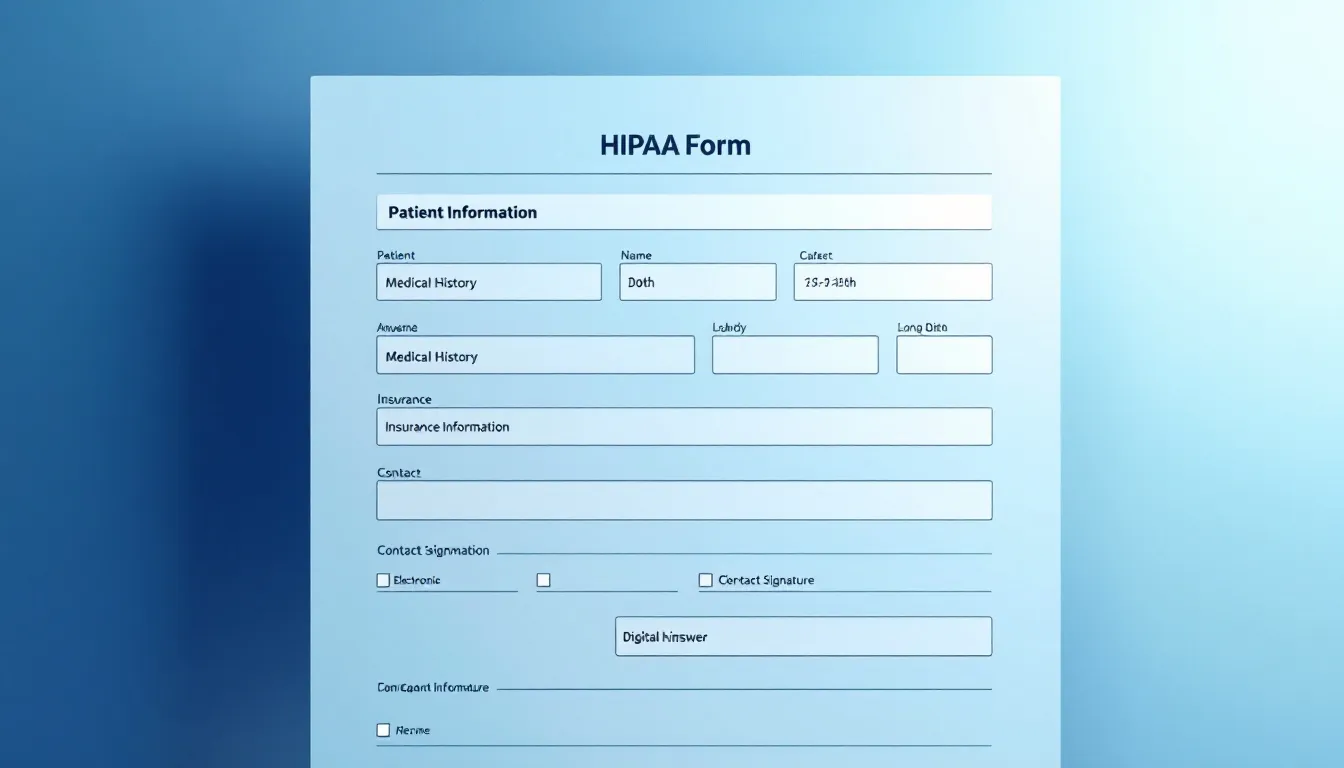
Healthcare providers often use online forms to collect patient information. Standard web forms may not meet HIPAA requirements, making HIPAA-compliant forms essential.
What are HIPAA-Compliant Forms?
HIPAA-compliant forms protect patient information and include the following features:
- Encryption: Forms must be encrypted to safeguard sensitive data.
- Secure Storage: Collected data must be stored securely.
- Clear Privacy Notices: Forms should inform patients about data usage and include their Notice of Privacy Practices.
Obtaining written authorization is essential when collecting sensitive information.
Benefits of Using HIPAA-Compliant Forms
- Data Security: Enhanced protection for patient information.
- Improved Patient Experience: Secure forms lead to higher completion rates and satisfaction.
- Streamlined Processes: Online forms reduce paper use and manual data entry.
- Compliance Assurance: Helps ensure adherence to HIPAA regulations.
- Permissible Communications: Providers can recommend alternative treatments without patient authorization if related to health products and care operations.
Best Practices for HIPAA-Compliant Digital Marketing
Healthcare providers should:
- Conduct a Risk Assessment: Regularly evaluate risks in digital marketing.
- Use HIPAA-Compliant Tools: Invest in compliant email and form solutions.
- Train Staff: Provide HIPAA compliance training.
- Implement Access Controls: Establish strict access for PHI.
- Monitor Compliance: Regularly audit compliance.
- Stay Informed: Keep updated on HIPAA regulations and best practices.
Conclusion
Healthcare organization compliance with HIPAA is essential for healthcare providers engaging in digital marketing. By using HIPAA-compliant emails and secure forms, practices can protect patient information and ensure that any covered entity making marketing communications complies with HIPAA regulations, build trust, and enhance marketing effectiveness. Adhering to HIPAA marketing rules safeguards patient privacy and helps avoid legal consequences. It is also crucial to inform individuals about their right to opt-out of receiving certain promotional messages to ensure transparency and compliance.
For HIPAA email solutions, contact Officite today. Our experts can guide you through creating and implementing these essential tools and safeguards.

Maryrose Dooley expertly guides small practices through the digital landscape, offering marketing strategies to attract more patients. Her unique blend of business acumen and design expertise creates visually appealing solutions that set businesses apart. With a passion for leveraging technology, Maryrose helps businesses of all sizes achieve their goals and stand out from the competition.